
Your floors get mopped on schedule, yet the lobby still looks gray by mid-morning. Dull commercial floors are a common headache for property and facility managers in New Jersey. The frustrating part is that the cleaning is actually happening. It just isn't touching the real cause.
Most of the time, the problem isn't dirt sitting on top of the floor. It's what builds up in the finish, what wears it down, and what a mop leaves behind. Grit, cleaner residue and heavy foot traffic all work quietly against the shine you paid for.
Below, we'll walk through why hard floors lose their look so fast. We'll also cover why routine mopping can't bring it back. Then we'll explain what professional floor care does differently. If your entry tile, VCT or polished floors never look clean, this will help you see where things stand. You'll also know what to ask before hiring anyone.
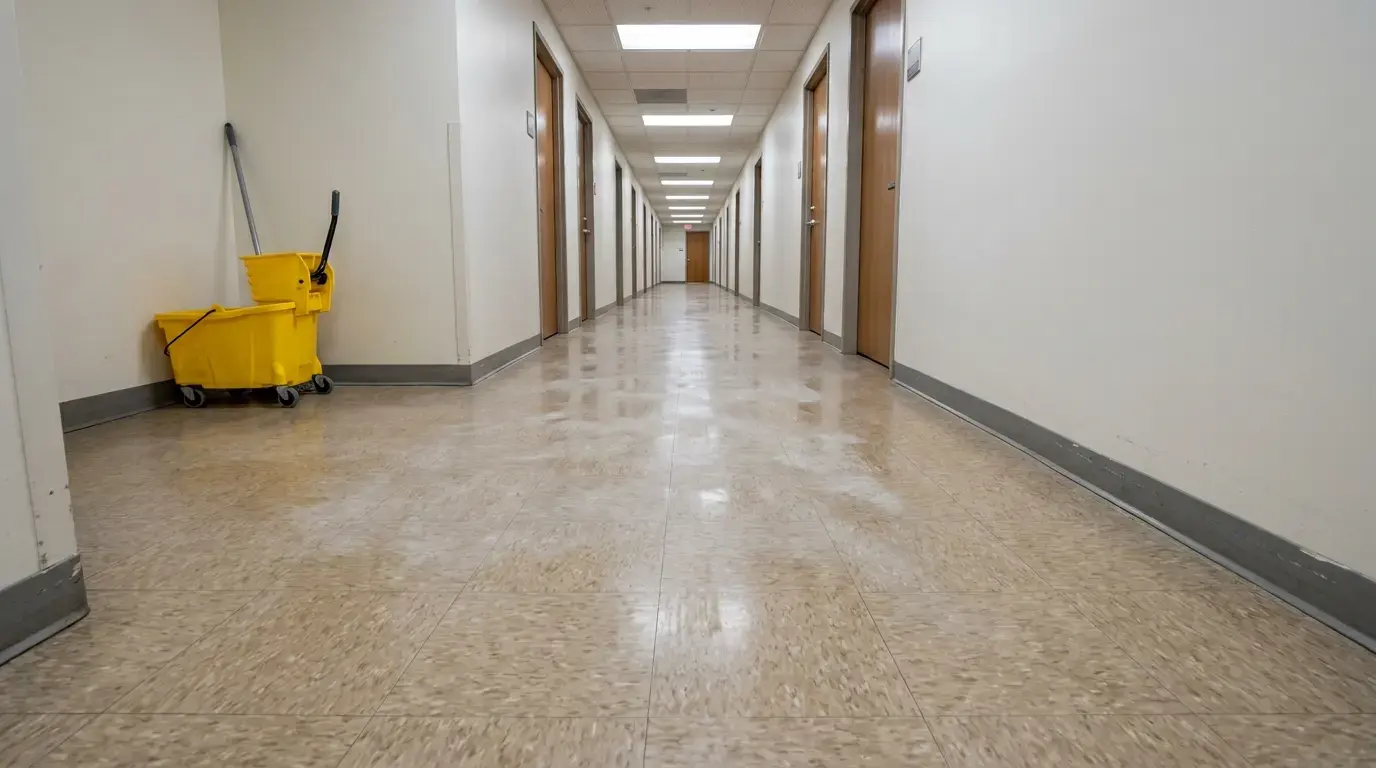
What's really making your floors look dull
Start with grit. Fine sand and small stones ride in on shoes from parking lots and sidewalks. Underfoot, that grit acts like sandpaper on the floor finish. Over weeks, it leaves thousands of tiny scratches that scatter light instead of reflecting it. The result is a hazy, flat look, even when the floor is technically clean.
Then there's residue. Many cleaners leave a thin film behind when they're used too strong or not rinsed off. That film is slightly sticky, so it grabs new soil and holds onto it. Each mopping adds another layer, and the floor slowly turns gray. Dirty mop water makes it worse by spreading old soil around. None of this means your staff is doing a bad job.
Worn VCT finish and heavy traffic lanes
Vinyl composition tile, or VCT, is everywhere in schools, retail stores and offices in New Jersey. On its own, VCT isn't shiny. The gloss comes from layers of floor finish applied on top. Foot traffic, carts and rolling chairs wear that finish down, and it doesn't wear evenly. You'll usually see dull paths through entrances, hallways, checkout areas and in front of elevators.
Once the finish is worn through in those lanes, soil gets into the tile itself. At that point, no amount of scrubbing will make it look new again. The fix is VCT stripping and waxing, which removes the old, damaged finish and builds fresh protective coats. How often that's needed depends on traffic and the manufacturer's guidance.
Why routine mopping can't bring the shine back
A mop is great at picking up spills and loose surface dirt. It isn't built to pull soil out of scratches or lift a film that's stuck to the finish. String mops also tend to push dirty water into corners and along baseboards, where it dries into dark edges.
Using the wrong product for the floor type causes its own problems. Some cleaners soften certain finishes, and others leave streaks on polished stone or sealed concrete. Adding more product usually makes the residue worse, not better. Before switching chemicals, it's smart to check the floor manufacturer's care guidance.
How professional floor care fixes dull floors
Professional floor care starts by figuring out what's going on with the surface. Hard floor scrubbing uses machines and pads to lift embedded soil and cleaner residue that mops leave behind. If the finish is still in decent shape, buffing and burnishing bring the gloss back. They smooth out the fine scratches that make a floor look flat.
Floor polishing helps surfaces like stone and concrete regain their clarity. When VCT finish is worn through, stripping and waxing starts the surface over. For floors that have been neglected for years, floor restoration takes things further. ON Cleaning Services handles each of these steps and then sets up a floor maintenance plan that fits your traffic. That way the shine doesn't fade again a few weeks later.
A dull commercial floor isn't a cleaning schedule problem. It's a finish problem. Routine mopping keeps a healthy floor healthy; it can't restore one that's lost its finish. Figure out which situation you're in before swapping products or increasing frequency.