
Every winter in New Jersey, the same white lines creep in from the front door. Salt stains on commercial carpet show up after the first real storm and hang around until spring. You clean them, they fade for a bit, and a few days later they're back.
Those marks come from rock salt and ice melt spread on sidewalks, lots and entry steps. Slush carries it inside on boots, and it dries into a chalky crust. The same residue coats tile and VCT near your doors. It leaves a cloudy film that regular mopping barely touches.
This guide covers where the stains come from and why they return after you think they're gone. It also covers the common mistakes that make them worse. Finally, we'll explain how professional carpet care and floor care deal with salt the right way. That way your entrance looks cared for all season, not just after a cleaning.
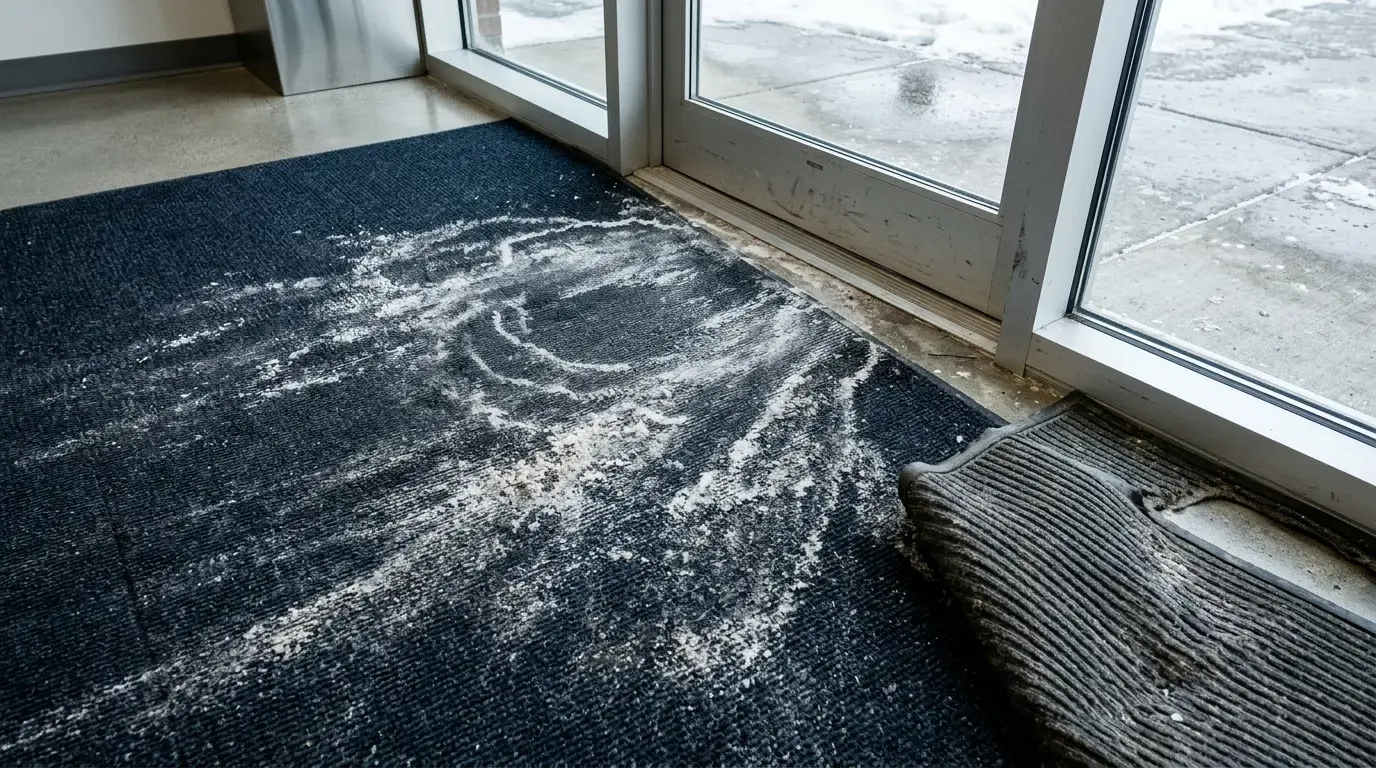
Where those white salt marks come from
When snow and ice hit, property owners and towns put down rock salt or other ice melt products. That's the right call outside, but the salt doesn't stay there. People walk through wet slush, and the salty water soaks into carpet fibers near the entrance. As the water dries, the salt stays behind as a white, crusty ring. On hard floors, it leaves a gray haze or powdery streaks.
Some ice melt products are also a bit oily, which adds a dark, greasy edge to the stain. The heaviest damage usually shows up within the first several feet of the door. Lobbies in hotels, apartment buildings and offices tend to take the worst of it after a storm.
Why salt stains keep coming back
The stain you see is only part of the problem. Salt dissolves and sinks deep into the fibers and sometimes into the backing. Blotting or light surface cleaning pulls up what's on top, and the carpet looks better for a day. Then the leftover moisture works its way back up as it dries. It carries dissolved salt with it, and the white mark reappears. Carpet pros call this wicking.
Cleaning products left in the fibers can make it worse, since their residue attracts more soil. On top of that, fresh salt comes in with every snowfall. Unless the residue is fully rinsed out and extracted, you're really just moving it around. That's why the same spots seem to return all winter.
What not to do about salt residue
It's tempting to scrub hard with a brush, but aggressive scrubbing can fray and untwist carpet fibers. That leaves a fuzzy patch that looks worse than the stain did. Soaking the spot with lots of water is another common mistake. Overwetting pushes salt deeper and can lead to lingering odors or browning.
Avoid grabbing random household products or bleach, since some can discolor or weaken the carpet. On hard entry floors, don't let salt film sit for weeks, because it can dull and break down the finish. Letting the problem ride until spring usually means more work later. When in doubt, check the carpet or floor manufacturer's care guidance before trying anything new.
How professional carpet and floor care handles salt
A professional approach focuses on removing the salt, not just hiding it. Spot and stain removal treats fresh marks early, before they have time to set. Hot water extraction rinses the fibers and pulls dissolved salt and residue out with strong suction. That's what stops the wicking cycle.
In busy lobbies, encapsulation cleaning can keep carpet looking presentable between deeper cleanings through the snowy months. On tile, VCT and other hard entry floors, hard floor scrubbing lifts the salt film. That lets the finish look right again. ON Cleaning Services can build a customized cleaning plan around winter, with flexible scheduling that fits your building. Come spring, your entrance won't need a major recovery project.
Treating salt stains during the season is lighter work than waiting for spring. The goal is to break the wicking cycle through extraction, not to blot the surface and hope. A plan built around winter traffic saves you the big recovery project in April.