
If you manage a commercial space in New Jersey, you've probably heard the debate on hot water extraction vs encapsulation. Both methods clean carpet well. They just do different jobs. Picking the wrong one can leave you with wet floors during business hours or soil that keeps coming back.
Then there's bonnet cleaning, dry powder cleaning and pro steam cleaning. Each one has a place in commercial carpet care. None of them is the best choice on every floor. The right pick depends on foot traffic and how fast the carpet has to dry. Soil level and carpet type matter just as much.
This guide breaks down how each method works and where it fits. It also covers why the carpet manufacturer's care guidance should have the final say. Use it to plan a routine that keeps your carpet looking good between deeper cleanings. A little planning now saves you from guessing every time the carpet looks tired.
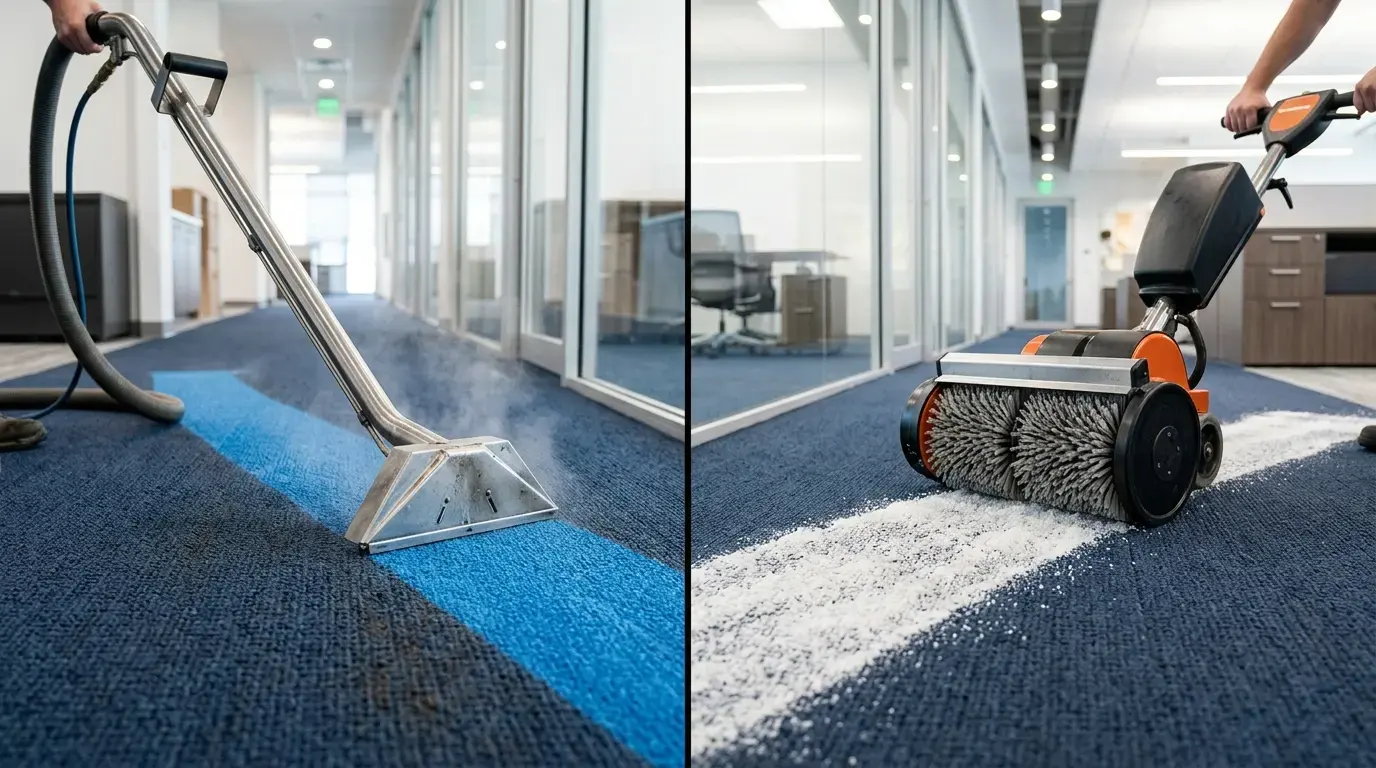
How hot water extraction and encapsulation actually work
Hot water extraction sprays heated water and cleaning solution deep into the carpet pile. A powerful vacuum pulls it back out, along with loosened soil. It's the most thorough restorative method most commercial carpets can get. The tradeoff is moisture. Carpet can stay damp for several hours, depending on airflow, humidity and pile density.
Encapsulation works differently. A low-moisture solution is worked into the fibers with a machine. As it dries, it wraps soil into brittle crystals. Those crystals come out with regular vacuuming. Because so little water goes down, the floor is usually ready for foot traffic much sooner. Encapsulation cleaning handles surface and mid-level soil well. It doesn't reach deep, heavy soil the way carpet extraction does.
Where bonnet, dry powder and pro steam cleaning fit
Bonnet cleaning uses a rotary machine with an absorbent pad. The pad lifts soil from the top of the fibers. It's fast and makes carpet look better right away, which suits lobbies and reception areas. It's an appearance method, not a deep clean. Too much bonnet work on some carpets can distort the fibers, so moderation matters.
Dry powder cleaning spreads an absorbent compound that's brushed in and then vacuumed out. It's a good option where water has to stay close to zero. Pro steam cleaning is the name many people use for hot water extraction. Ask any provider which process they mean, since the label alone doesn't tell you. Our carpet care crew can explain each option before any work starts.
Match the method to traffic, soil and drying time
Start with how people use the space. A busy corridor or entry takes far more grit than a private office. Heavy traffic areas often do well with low-moisture encapsulation between periodic extractions. Next, think about drying time. A retail floor or hotel lobby that can't close may need encapsulation or dry powder during open hours. A school or office that empties on weekends can handle full extraction.
Then look at soil level. Light soil and dullness respond to encapsulation or bonnet work. Ground-in soil, heavy spills and old traffic lanes usually call for hot water extraction. In retail store cleaning and school cleaning, drying time is often the deciding factor. Mixed-use buildings may need different methods in different rooms.
Check carpet type and manufacturer guidance first
Carpet construction matters as much as traffic. Commercial loop pile and cut pile react differently to rotary machines and moisture. Wool and some natural fibers are sensitive to heat and certain solutions. Carpet tiles can shift or curl at the edges if they get too wet. That's why the manufacturer's care guidance should come before any method choice.
Many manufacturers name a preferred cleaning method and a periodic deep clean. Some warranties may depend on following those instructions. Pull the carpet specs from your facility records if you have them. ON Cleaning Services looks at carpet type, traffic and your schedule before recommending a plan. With 25 years of experience, we'll tell you plainly which method fits and which one doesn't.
Think of it as a rotation rather than a choice. Encapsulation keeps appearance up between extractions; hot water extraction handles the deep reset. The manufacturer's care guidance and your building's drying window decide the cadence.