
Your VCT floor looks dull and scuffed, and someone says it needs a full strip. Maybe it does. Maybe it doesn't. Weighing VCT stripping and waxing vs burnishing comes down to one question. How much finish is left on the tile? Stripping is the biggest and most disruptive job on the list. Lighter work often brings the shine back with far less downtime.
Vinyl composition tile shows up in schools, retail stores, warehouses and medical offices in New Jersey. It holds up well, but only while its protective finish stays intact. Once that finish wears through, the tile itself starts taking the abuse. Scratches, stains and gouges set into the vinyl and get much harder to hide.
This guide explains what stripping and waxing, buffing and burnishing, and floor polishing each do. You'll learn how to read the warning signs on your own floor. You'll also see how routine maintenance stretches the time between full restorations.
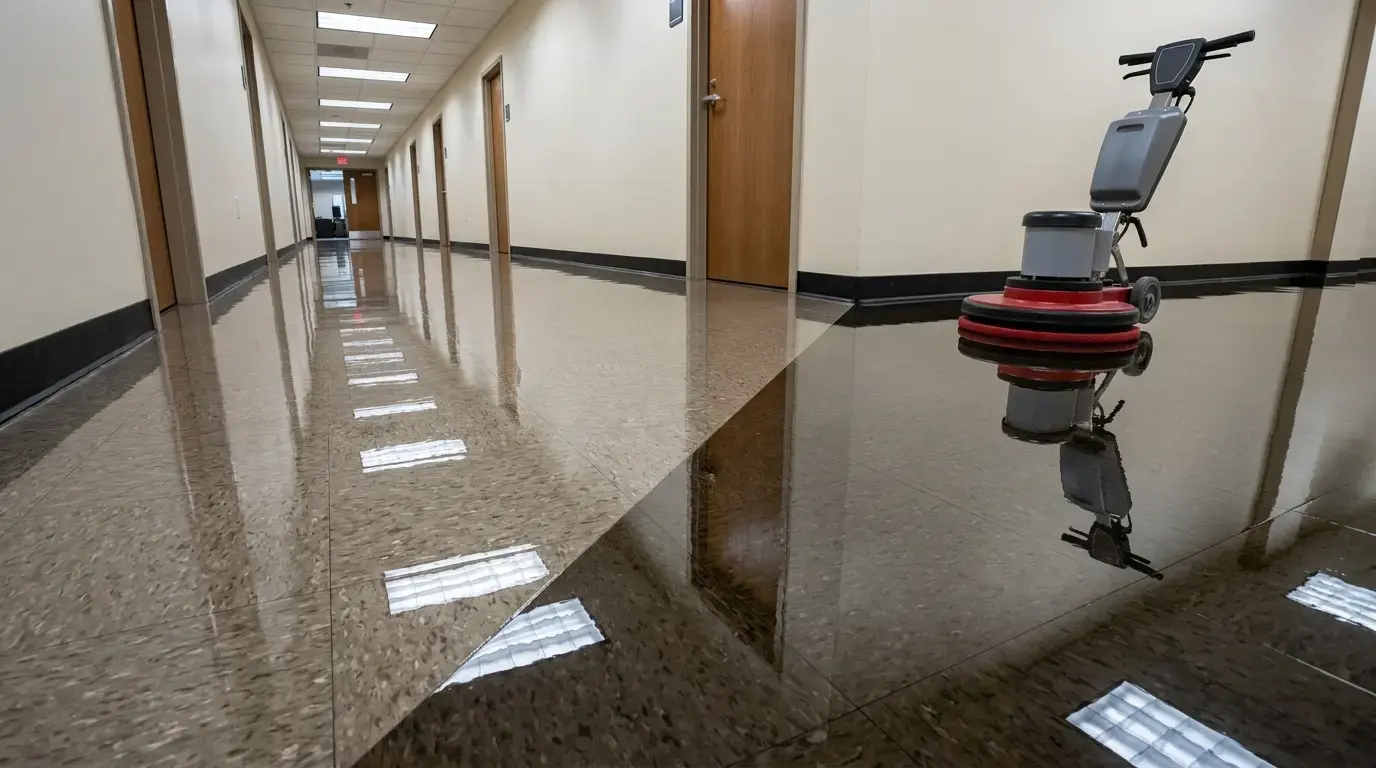
What stripping and waxing does to VCT
Stripping removes every layer of old floor finish down to bare tile. A crew applies a stripping solution, scrubs it with a floor machine and picks up the slurry. After rinsing and drying, several fresh coats of finish go down. Each coat has to dry before the next one. The result is a clean, even base with no trapped dirt or yellowed layers. It's the most complete reset a VCT floor can get.
It's also the most involved. The area has to be closed, furniture moved and the floor left alone while the finish cures. That's why a strip job works best as a planned restoration, not a routine fix. Timing depends on traffic, finish type and the upkeep in between.
Buffing, burnishing and polishing explained
Buffing runs a slower machine with a pad over the finish. It smooths light scuffs and brings back some gloss. Burnishing uses a high-speed machine that warms the top of the finish through friction. That creates a harder, wet-look shine. Both only work when there's enough finish left to polish.
Floor polishing is a broader term. On VCT it usually means buffing or burnishing the existing finish. On stone, concrete or wood, polishing can mean a different process entirely. Always ask what a provider will actually do on your floor. Buffing and burnishing are maintenance tasks. They don't add protection by themselves. When the finish thins out, a scrub and recoat adds fresh layers without stripping everything.
How to tell which treatment your floor needs
Look closely at the high-traffic lanes, doorways and spots under chair wheels. If the tile looks flat and raw where people walk most, the finish has likely worn through. That floor usually needs stripping and waxing. Maybe the floor shows scuffs and black marks but still has a sealed surface. Then buffing or burnishing may be enough.
A dull, cloudy or yellowed film is a different story. That can mean dirt is trapped between old layers of finish. Burnishing over it only polishes the problem. A dark buildup along edges and corners points the same way. When you're unsure, our floor care crew can help sort out what the tile actually needs.
Build a maintenance plan between restorations
Most of a VCT floor's life happens between full strips. Good upkeep keeps that stretch as long as possible. Dust mopping and damp mopping keep grit from grinding into the finish. Entry mats catch a lot of soil before it reaches the tile. Periodic burnishing keeps the shine up in busy areas. When the finish gets thin, a scrub and recoat restores protection without a full strip.
Hard floor scrubbing helps where soil is heavy. Follow the finish manufacturer's guidance on products and recoat timing. In warehouse cleaning and medical office cleaning, these steps often vary by zone. ON Cleaning Services builds customized plans around your traffic and hours. That way the floor gets the right treatment before it needs a full strip.
The question isn't 'strip or burnish', it's 'how much finish is left?' Burnishing a floor with worn-through tile is wasted work. A quick walkthrough of the traffic lanes tells you what the floor can actually respond to.